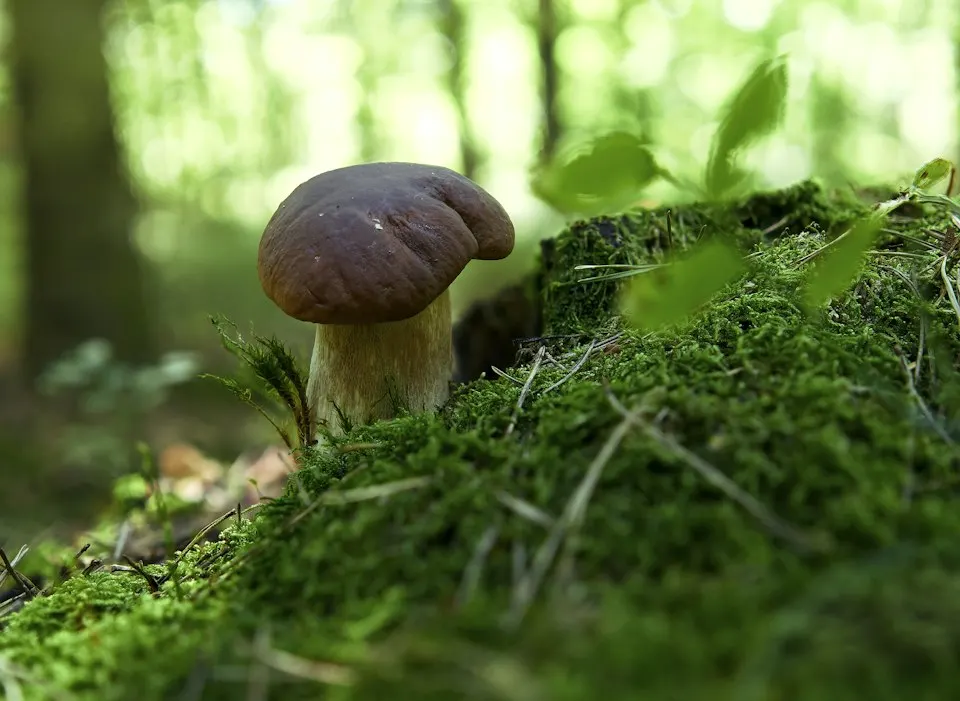
In Poland the mushroom season starts in spring, and the main flush comes in August, September and October. Below is a calendar, month by month. It gives the frame, and the weather can shift it by a few weeks.
Spring: April and May
This is the time of the first mushrooms, but you pick few of them and only a few species. The ones most often mentioned are shaggy ink caps (czernidłaki) and St George's mushrooms (majówki). Morels (smardze) also appear. At least some morel species are legally protected, so check the current regulation on protected fungi before you pick any.
June
The summer season begins. When warm rain comes in June, the first chanterelles (kurki), birch boletes (koźlarze) and slippery jacks (maślaki) appear. Birch boletes usually grow under birches, and slippery jacks in young pine forest.
July
Chanterelles, birch boletes and slippery jacks are in full swing. Parasol mushrooms (kanie) join them, usually at forest edges and in clearings. The July season is short and depends heavily on rain. After a dry week the mushrooms vanish as fast as they came.
August, September and October
This is the main season. In these three months you can pick the most species:
- Penny buns / cep (prawdziwki): August to October, most in September.
- Bay boletes (podgrzybki): August to November, including the bay bolete (podgrzybek brunatny), the one picked most often.
- Saffron milk caps (rydze): August to October, in young pine forest.
- Honey fungus (opieńki): August to October, in clumps on stumps and around tree roots.
- Slippery jacks, chanterelles, birch boletes: they last into autumn if there is no frost.
September usually gives the best balance. The soil is damp after the summer rain and the nights are not yet freezing.
November and late autumn
After the first frosts most summer species disappear. What remains grows on wood: honey fungus, velvet shanks (zimówki) and oyster mushrooms (boczniaki). Pick only what you know for certain, because old wood carries many species, including poisonous ones. The safety rules are in how to avoid mushroom poisoning.
Winter
From December to March there is almost no picking. In mild winters a few mushrooms turn up on wood, but do not plan a trip around them.
Where to look in a given month
Species differ in habitat, so read the calendar together with the type of forest:
- Slippery jacks and saffron milk caps: young pine forest, often on sandy track edges.
- Chanterelles: bright coniferous and mixed forest, in moss and along track edges.
- Birch boletes: around birches, also at forest edges and clearings.
- Cep and bay boletes: older mixed and coniferous forest, often near oak, beech and pine.
- Parasol mushrooms: forest edges, clearings and roadsides.
- Honey fungus: clumps at stumps and on dead wood.
In spring and summer, damp and shaded places are better. In autumn, when the nights are cold, look in sunnier spots where the litter holds heat longer.
What shifts the calendar
- Weather: a warm, damp year brings the flush earlier, while a dry July and August delay or shorten it.
- Altitude: in the mountains the season starts later and ends earlier than on the lowlands.
- Soil: in sandy pine forest mushrooms come out fast after rain, and in richer mixed forest they last longer.
So the calendar alone is not enough. Open the mushroom forecast, which shows current conditions for each region, and read how many days after rain mushrooms grow.
Email alert
Do not miss the next window
The best windows last a few hours: after a storm, after rain, on a clear night with an active Sun. Sign up and we will email you when the index at your spots goes above 60.