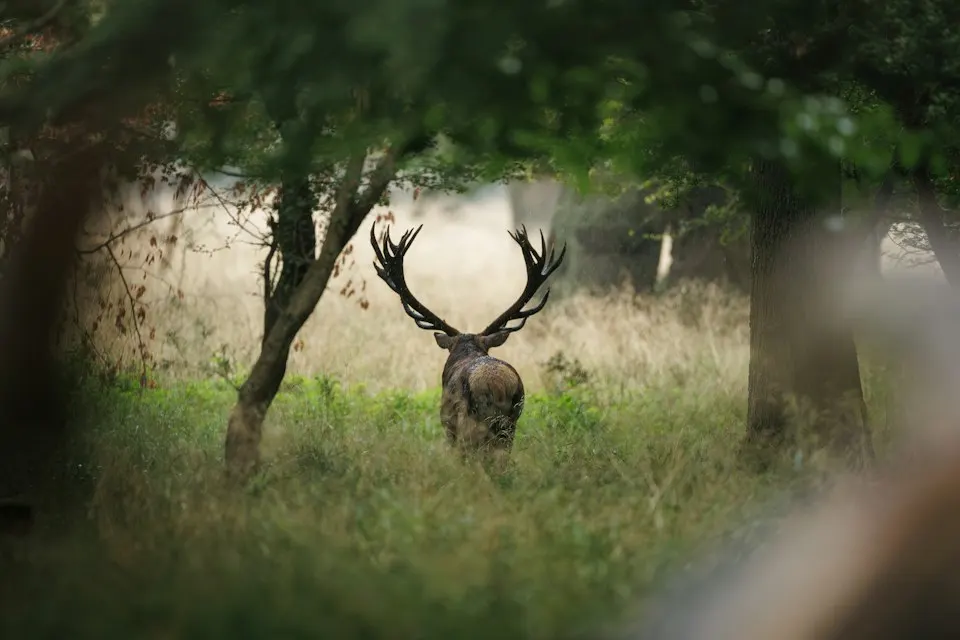
In autumn, cranes and geese gather at roosts in Poland before flying on south and west. The evening arrival of thousands of birds is one of the best wildlife spectacles in the country. Crane numbers peak from mid-September to the end of October, and geese from October until spring.
Migration calendar
- August: local cranes start roosting in flocks, for example at Biebrza.
- September: birds from Finland and the Baltic states join them. Numbers rise fast.
- Late September and early October: peak crane passage in Poland.
- October and November: the largest flocks of bean and white-fronted geese.
- Winter: geese and whooper swans stay where the water does not freeze.
- February to March: geese return and the first cranes arrive.
The largest roosts in Poland
The best known is Warta Mouth near Słońsk. The latest count found about 10,000 cranes there, and the record from 2013 is 19,000. At Warta Mouth, about 200,000 bean and white-fronted geese were counted at the roost in the late 1990s, the most in Poland. It is also the most important Polish wintering site for whooper swans.
The second big site is the lower basin of the Biebrza valley. In one October count, 5,400 cranes were seen flying in to roost there. At Bagno Bubnów in Polesie National Park, more than 3,000 cranes sometimes roost in autumn. The Milicz Ponds are also good, where the autumn fish harvest draws white-tailed eagles and herons as well.
Europe
At Linum near Berlin, a single count in mid-October 2006 found 72,000 cranes and 60,000 geese. The Rügen-Bock area is the second great German resting site. In Hungary, autumn cranes gather at Hortobágy. In spring, go to Sweden's Lake Hornborga, where a record 27,300 cranes were counted on 3 April 2019.
How to tell cranes from geese
Cranes fly with their necks stretched out and their legs trailing behind the tail. Their call is a loud, trumpeting bugle that carries a long way. They often fly very high in loose skeins and circle in thermals. Geese have shorter legs tucked under the body, beat their wings faster and honk. The white-fronted goose has a white patch at the base of the bill and black bars on the belly. The bean goose has a dark head and an orange band on a black bill. Through a telescope you can tell them apart on a field, but rarely with the naked eye in flight.
Weather and wind
Migrating birds prefer to fly with the wind. In autumn, winds from the north and north-east help them fly south, so roosts fill up after such winds. In spring it works the other way: winds from the south and south-west carry them north. Our forecast takes this wind direction into account for places where passage matters.
- Good: light or moderate wind from a direction that helps passage, no rain, good visibility.
- Worse: strong headwind, heavy rain, thick fog at dusk.
- Note: after several days of bad weather, birds often move in large numbers as soon as the wind changes.
How to watch the evening flight
Arrive an hour before sunset. Stand on a tower, a dike or by a road with a view of the floodplain. You will hear the skeins first, then see them. Cranes land as the light fades, and geese often even later. In the morning the birds leave for the fields, usually just before sunrise.
Bring binoculars and, if you have one, a telescope. Dress warmly, because open country is windy. Leave the car in a car park and do not walk towards flocks on the fields. Birds at a roost are tired after flying, and every disturbance costs them energy they need for the journey.
What to bring
- Binoculars, 8x42 or 10x42, and a telescope on a tripod if you can.
- A warm jacket, hat and gloves, because it gets cold fast on a floodplain at dusk.
- A headtorch with a red light for the walk back to the car.
- Cash or a phone to buy a national park ticket.
Rules
The common crane is protected in Poland. The regulation issued under Article 52 of the Nature Conservation Act bans deliberately disturbing birds at roosts and at feeding sites of migrating or wintering flocks. In national parks you walk only on trails, and entry may need a ticket. Bean and white-fronted geese are game species, so outside the parks you may meet a hunt from September to December, including near roosts.
Sources
- Cranes at Warta Mouth (Science in Poland)
- More cranes at Biebrza (National Geographic Polska, in Polish)
- The Warta floodplains (National Geographic Polska, in Polish)
- Czahary, Polesie National Park (Birdingplaces)
- Linum (Wikipedia, in German)
- Hornborgasjön (Wikipedia, in Swedish)
- Regulation on species protection of animals (Dz.U. 2022 item 2380, in Polish)
Do not miss the next window
The best windows last a few hours: after a storm, after rain, on a clear night with an active Sun. Sign up and we will email you when the index at your spots goes above 60.