Short answer: no. The green scum on a lake, the strands in a river and the algae on a Baltic beach are not the same as seaweed from a clean, open Atlantic shore. The most dangerous are cyanobacteria, which cannot be recognised as safe by taste or by looks.
What cyanobacteria are
Cyanobacteria (blue-green algae) are photosynthetic bacteria that form blooms on warm, calm days: green streaks, a suspension like spilled paint, a jelly-like scum and brown-green foam at the shore. The water turns cloudy and smells musty or earthy. The toxins cannot be seen, so every bloom is treated as a hazard.
Cyanobacteria produce toxins. Microcystins and nodularin damage the liver, anatoxins act on the nervous system. In the Baltic the summer blooms are made mainly by Nodularia spumigena and Aphanizomenon flos-aquae. Nodularia produces nodularin, and Dolichospermum can be a source of microcystins and anatoxins. Baltic strains of Aphanizomenon have not been found to produce toxins, unlike freshwater ones.
People are exposed by swallowing water or foam, through skin or eye contact, and by breathing in aerosol. Children may be more at risk because they swallow water and sand more easily while playing.
The WHO 1999 guidelines (as summarised by US EPA) describe alert levels for recreational water: about 20,000 cyanobacterial cells per millilitre means a low risk of short-term effects (skin irritation, stomach upset), about 100,000 cells a moderate risk, and once a scum forms the risk is high, with controlled contact or a swimming ban advised.
Why we do not pick wild freshwater algae
- On the shore there is no way to tell a safe alga from a cyanobacterial bloom. Blooms mix with other organisms and change from day to day.
- We found no official advice that cooking or drying removes the toxins, so do not treat processing as a safeguard.
- Evidence from the supplement market: in a 2022 Belgian study microcystins were found in 9 of 35 algae products tested, at 0.24 to 5.6 µg/g, and three exceeded a proposed 1 µg/g value. The contamination occurred only in products containing Aphanizomenon flos-aquae (AFA), an alga harvested from natural blooms (for example in Klamath Lake). Products made only from spirulina were below the detection limit.
What about spirulina and chlorella?
Spirulina (Arthrospira) and chlorella on the shelf come from controlled farms where the producer can test batches for toxins. That is entirely different from algae collected from a lake. The authors of the Belgian study stress that control and regular testing are needed especially for material harvested from the wild. Do not buy supplements made from wild blooms and do not use them in place of food.
The Baltic: what grows there and why we do not recommend it
Bladderwrack and sea lettuce grow in the Baltic, but it is not a good place to pick seaweed for food.
- Eutrophication. Cyanobacterial blooms arise with an excess of nutrients and intensify as the water warms. Sea lettuce likes the same enriched water and in summer forms blooms that give off hydrogen sulphide as they rot.
- Season. Blooms fall mainly in summer. The bathing season runs from mid-June to the end of August, and in years with strong blooms dozens of bathing sites have been closed at once (58 in 2018).
- Toxins in and on the fronds. The Danish food institute (DTU) notes that seaweed can carry toxic microalgae and cyanobacteria, which is why thorough cleaning matters.
- Metals and iodine. The same as for any seaweed: it accumulates metals, and BfR and ANSES warn about iodine. Details in edible seaweed.
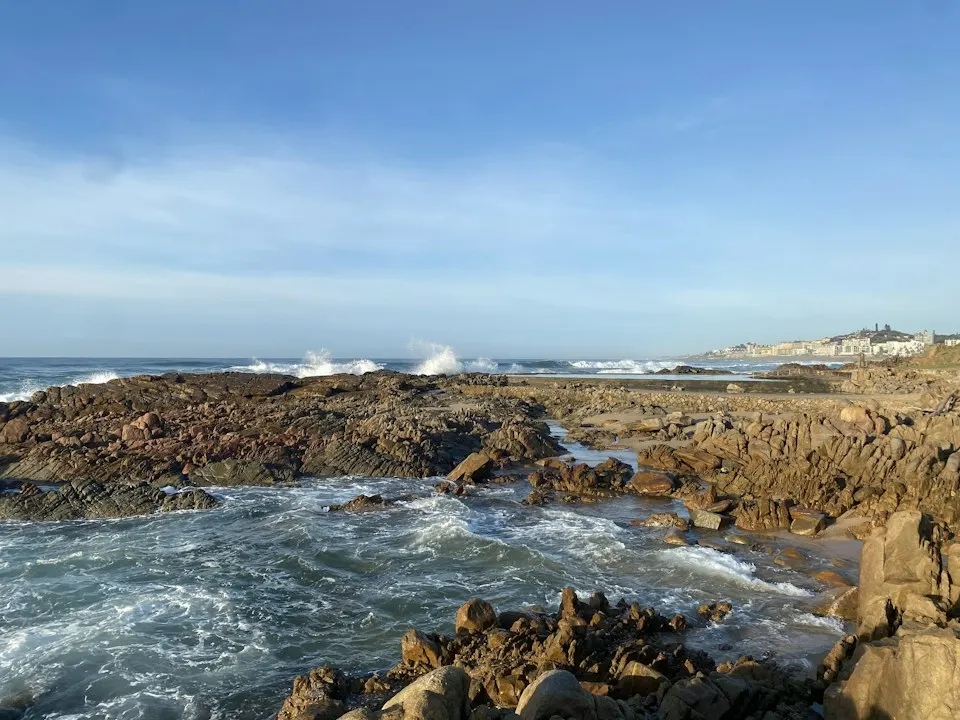
Clean rocky shores with edible seaweed lie on the Atlantic and the North Sea. You will find them in the tide module.
What to do after contact with a bloom
This is general advice from official sources and the Swiss institute Eawag. It does not replace a doctor or a vet.
- Rinse the skin with clean water, shower with soap and change out of wet swimwear.
- Do not swallow the water. Do not let children play in foam or beside a scum.
- Possible effects according to Eawag: irritation of the skin and mucous membranes, vomiting or diarrhoea, difficulty breathing, allergic reactions and, in severe cases, convulsions or paralysis. If symptoms of poisoning appear, seek medical attention immediately.
- A dog should not drink from a bloom, enter it or lick algae off its coat. Signs in dogs can appear within minutes: lethargy, drooling, fever, vomiting, diarrhoea, muscle tremors. Rinse the dog thoroughly and contact a vet straight away.
- You can check the status of Polish bathing sites on the GIS service (sk.gis.gov.pl). The restrictions at a given bathing site are given in the notice of the sanitary authority or the GIS service.
Sources
- Eawag: cyanobacteria, effects and behavioural recommendations
- US EPA: WHO 1999 guideline values for cyanobacteria in freshwater
- Wodne Sprawy: cyanobacteria forming a summer water bloom in the Baltic Sea
- Cyanobacteria, blooms and bathing site status (Gdynia city information, in Polish)
- Van Hassel et al. 2022: microcystins in algae food supplements (Toxins)
- DTU Food Institute: seaweed may contain harmful substances
- ANSES: green algae, bathing and shellfish consumption (in French)
This is general information, and local rules and sanitary notices may differ. If you or your pet show symptoms, contact a doctor or a vet.
Do not miss the next window
The best windows last a few hours: after a storm, after rain, on a clear night with an active Sun. Sign up and we will email you when the index at your spots goes above 60.